

Herbal Medicine for Anxiety Relief: Natural Remedies for a Calmer Mind
Anxiety disorders are among the most prevalent mental health conditions worldwide, affecting over 264 million people (the World Health Organization). While conventional treatments such as cognitive-behavioural therapy (CBT) and prescription medications are effective, many individuals seek natural alternatives like herbal medicine to manage their anxiety symptoms.
Herbal medicine has been used for centuries in Traditional Chinese Medicine (TCM), Ayurveda, and Western herbalism to support mental wellbeing. This article explores scientifically backed herbal remedies for anxiety relief, how they work, and how you can incorporate them into your daily life.
1. How Herbal Medicine Helps with Anxiety
Herbal remedies work by targeting the body’s nervous system, stress response, and neurotransmitter levels, promoting relaxation without the side effects commonly associated with pharmaceutical drugs. Studies have shown that many herbal adaptogens and calming herbs can regulate cortisol (the stress hormone), serotonin, and gamma-aminobutyric acid (GABA) levels, which play crucial roles in anxiety regulation (published research).
2. Top Herbal Remedies for Anxiety Relief
A. Ashwagandha (Withania somnifera)
✅ Best for: Chronic stress, general anxiety
✅ How it works: Ashwagandha is an adaptogen, meaning it helps the body adapt to stress. Research suggests that it lowers cortisol levels and improves stress resistance (published research).
✅ Dosage & Use:
• 300-600 mg of Ashwagandha root extract per day
• Can be taken in capsule, powder, or tea form
✅ Scientific Evidence:
A randomised, double-blind study found that participants taking 600 mg of Ashwagandha daily for 60 days reported a 27.9% reduction in stress levels compared to the placebo group (published research).
B. Valerian Root (Valeriana officinalis)
✅ Best for: Sleep-related anxiety, nervous tension
✅ How it works: Valerian root increases GABA levels, which have a calming effect on the nervous system. It is commonly used as a natural sleep aid (published research).
✅ Dosage & Use:
• 400-900 mg of Valerian root extract before bedtime
• Can be consumed as a capsule, tincture, or tea
✅ Scientific Evidence:
A meta-analysis of studies found that Valerian root improved sleep quality without causing dependence, making it an effective alternative for benzodiazepines (published research).
C. Passionflower (Passiflora incarnata)
✅ Best for: Generalized Anxiety Disorder (GAD), restlessness
✅ How it works: Passionflower contains compounds that increase GABA levels, promoting relaxation without drowsiness (published research).
✅ Dosage & Use:
• 250-500 mg of Passionflower extract per day
• Ideal as tea, tincture, or supplement
✅ Scientific Evidence:
A study compared Passionflower extract to oxazepam (a prescription anti-anxiety medication) and found it was equally effective without causing sedation or addiction (published research).
D. Lemon Balm (Melissa officinalis)
✅ Best for: Anxiety-induced digestive issues, panic attacks
✅ How it works: Lemon balm has a mild sedative effect and helps regulate mood and cognitive function (published research).
✅ Dosage & Use:
• 300-600 mg of Lemon Balm extract per day
• Commonly taken as a tea or capsule
✅ Scientific Evidence:
A clinical study found that Lemon Balm reduced stress and improved mood in participants within just one hour of consumption (published research).
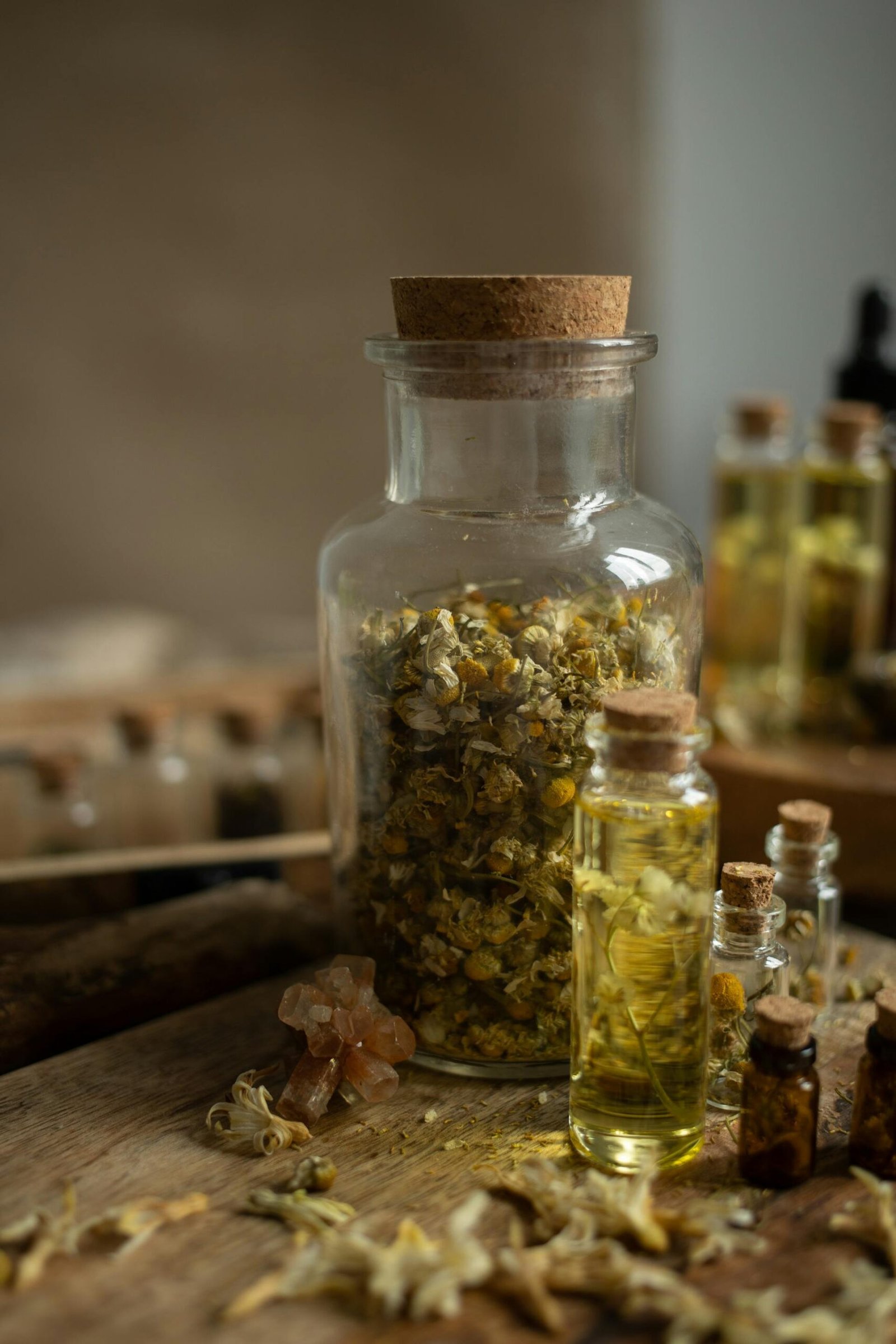
E. Chamomile (Matricaria chamomilla)
✅ Best for: Mild anxiety, relaxation
✅ How it works: Chamomile contains apigenin, a compound that binds to GABA receptors, reducing anxiety symptoms (published research).
✅ Dosage & Use:
• 220-1100 mg of Chamomile extract per day
• Best consumed as a tea
✅ Scientific Evidence:
A study showed that Chamomile significantly reduced symptoms of Generalized Anxiety Disorder (GAD) compared to a placebo (published research).
3. How to Incorporate Herbal Remedies Safely
While herbal remedies can be highly effective, it is important to:
✅ Consult a qualified herbalist before starting a new regimen
✅ Start with a low dose and gradually increase
✅ Monitor for potential interactions with existing medications
✅ Choose high-quality supplements from trusted sources
4. Additional Lifestyle Practices for Anxiety Management
Alongside herbal remedies, combining holistic practices can enhance their effectiveness:
• 🧘 Mindfulness meditation & deep breathing
• 🏃♂️ Regular exercise & outdoor activities
• 🍏 Balanced diet with mood-boosting foods
• 🚫 Limiting caffeine & alcohol consumption
5. Conclusion
Herbal medicine offers a natural, effective, and well-researched approach to managing anxiety. Whether you choose Ashwagandha, Valerian Root, Passionflower, Lemon Balm, or Chamomile, these herbs can help you achieve a calmer, more balanced state of mind without the side effects of pharmaceutical medications.
To explore personalised herbal remedies tailored to your needs, consider consulting a certified herbalist or holistic health practitioner.
Talk through your situation with one of our practitioners
A free 15-minute discovery call with one of our practitioners is the easiest way to see if working together is the right next step.
References
- Akhondzadeh S et al. (2001). Passionflower for generalised anxiety. Journal of Clinical Pharmacy and Therapeutics, 26(5), 363–367.
- Janda K et al. (2020). Passiflora incarnata in neuropsychiatric disorders: systematic review. Nutrients, 12(12), 3894.
- Chandrasekhar K et al. (2012). Ashwagandha for stress and anxiety. Indian Journal of Psychological Medicine, 34(3), 255–262.
- Amsterdam JD et al. (2009). Chamomile for generalised anxiety disorder. Journal of Clinical Psychopharmacology, 29(4), 378–382.
- NICE (2011). GAD and panic disorder in adults (CG113).
- NIMH.
Disclaimer: This page is for informational purposes only and does not constitute medical advice. Herbal medicine should not replace treatment recommended by a qualified medical professional. Always consult your GP before making changes to your medication or treatment plan. The practitioners at PAEAN Therapy are registered with the National Institute of Medical Herbalists (NIMH).